
Things of the Least
On 24th October 2025, the exhibition Things of the Least: Lively Exhibition Making with Children under 3 was opened at Manchester Art Gallery.
Things of the Least is a 3-year research project funded by the Arts and Humanities Research Council. This, and one other UK project were the recipients of the first AHRC Pilot Exhibition Fund. It explores the ways very youngest children can actively contribute to exhibition-making, transforming the public space of the gallery. The project involved a team of fifteen people including museum specialists, early childhood researchers and community leaders, artists, filmmakers and designers. RAAD’s own Becky Shaw was lead artist, working across the team.
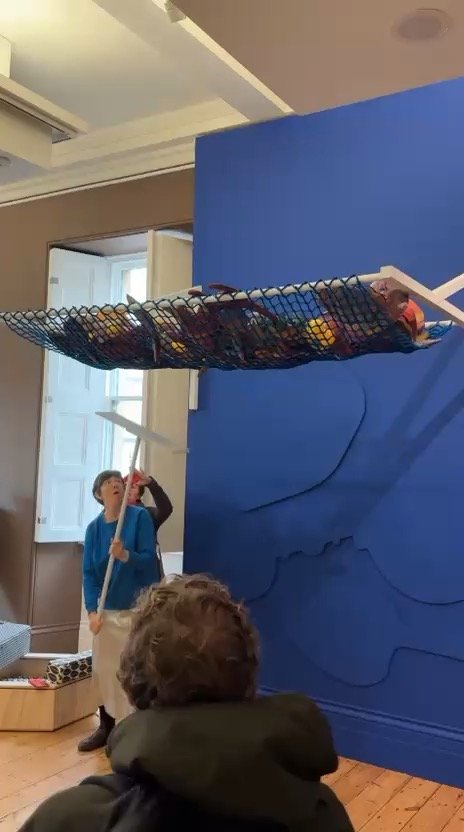
The project focuses on those things that are typically swept to the edges or considered least in gallery practices and society. This includes the wisdom of the youngest children so often overlooked in knowledge creation; the opinions, thoughts and ideas of families typically absent from the museums sector; and the challenge of exhibiting objects from the Mary Greg collection - a vast treasure trove of ordinary household objects collected at the turn of the 20th century considered to have little art value.
Things of the Least involves trying to find a new exhibition form so that two opposing principles might live together. The first principle is that babies’ wisdom comes from a sophisticated mixture of cognition, feeling and perception grounded, and grounding them, in the material world. They discover and inhabit that world through touching, mouthing, moving and looking. The second principle is that a civic museum has a responsibility to protect its artefacts for the future. Making sure the collection is safe requires no touching, no mouthing, no moving and not too much looking (or at least not too much light). Yet as Liz Mitchell, the Collection’s Curator points out, “this is a collection of ordinary things, of domestic things: a collection of things that want to be held, things that want to be played with, things that want to be experienced with touch and intimacy”. If Things of the Least was going to become more than idea, we needed to find ways to hold these irreconcilable qualities together in space and time.
The research process involved six artists developing a protype ‘play kit’ based on the qualities and ‘thingness’ of some of the objects from the Mary Greg Collection. These became the centre of play sessions with families living in temporary accommodation and families attending a Stay and Play session at Platt Hall in partnership with city wide children centres. Over the last two years, ongoing observations and discussions about how those under 3s and their parents encountered the play kit - its materials, objects, space - and each other informed the exhibition’s design. A key focus became how we might design space, materials and form to ensure that the static artefacts generated movement.
The exhibition includes three main structures that were built to ‘be verbs”. Most Mary Greg objects were made for moving verbs: scooping, opening, rolling etc. As real movement was not possible, the artists incorporated these movements into their objects. As babies explored the artist’s objects, they added their own movements. The melding of movements into verbs then guided our design, forming into three exhibition structures. Our team designers, Ashleigh Armitage and Dan Dainton Simpkins from Kunstruct worked with our initial ideas and experimented with ways to carry the verbs into the space inside the gallery and also outside through a visual identity.
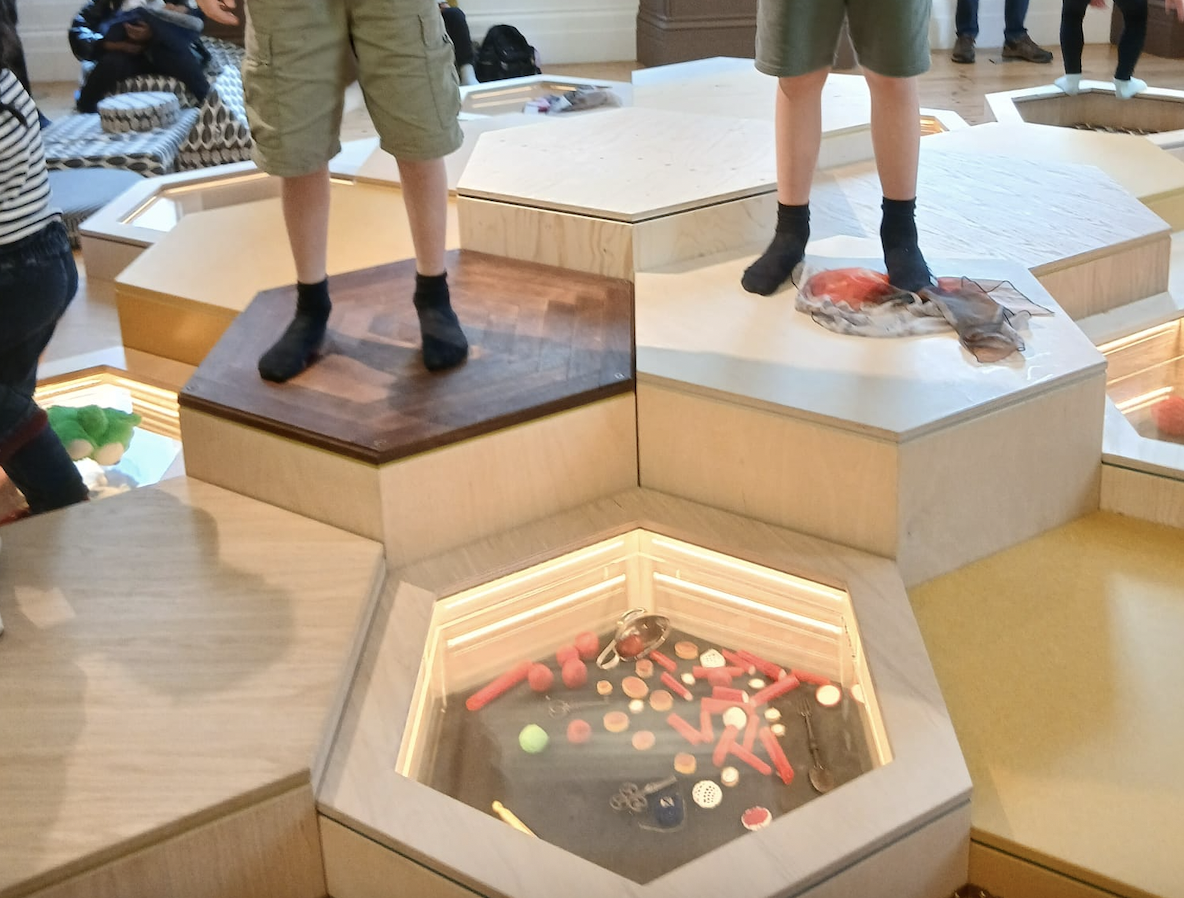
In the gallery the first structure is a ‘scatter’ of hexagons containing Mary Greg objects and artists objects (by Naomi Kendrick), intended to energise inviting, connecting, collecting, arranging, scattering, animating, ordering and performing. A second form is an encircling arc and a giant bird gathering post (made by Charlotte Dawson). The design was built to invite the smallest babies and carers to be gathering, noticing, reaching, resting, stroking and spinning. The third space holds transformed artefacts and videos of translated video gestures from artefacts and babies (by Josie Hepplewhite with Belle Vue Productions). This is built to invite entering, inhabiting and enveloping. Using all these forms of making, we sought ways to create a space where we all moved with the still collection.
In addition to the exhibition space, Things of the Least includes a free publication that brings together the diverse perspectives of the project team, also designed by Ashleigh Armitage.
Exhibition is free: all welcome.
Weekly schedule of events and open times:
Tuesday
Closed until 1pm – The space is reserved for an NHS session supporting local families.
Play Session, 1–3.30pm – Join us for a play session led by an Early Years Researcher from Manchester Metropolitan University, exploring child development through play.Wednesday
Baby Social, 10.30am–12pm. Starting from 5 November 2025, term-time only– with NHS Infant Feeding Support: a welcoming space for new parents and carers to connect and receive guidance.
Open to the public, 2.30–4pm –the exhibition space is open for everyone to explore freely.Thursday
Closed until 1.30pm – We’re hosting our Families of the World session, celebrating cultural diversity and inclusion.
Open to the public, 1.30–3.30pm – come in and enjoy the exhibition space at your own pace.Friday, Saturday & Sunday
Open to the public, 10am-4.30pm
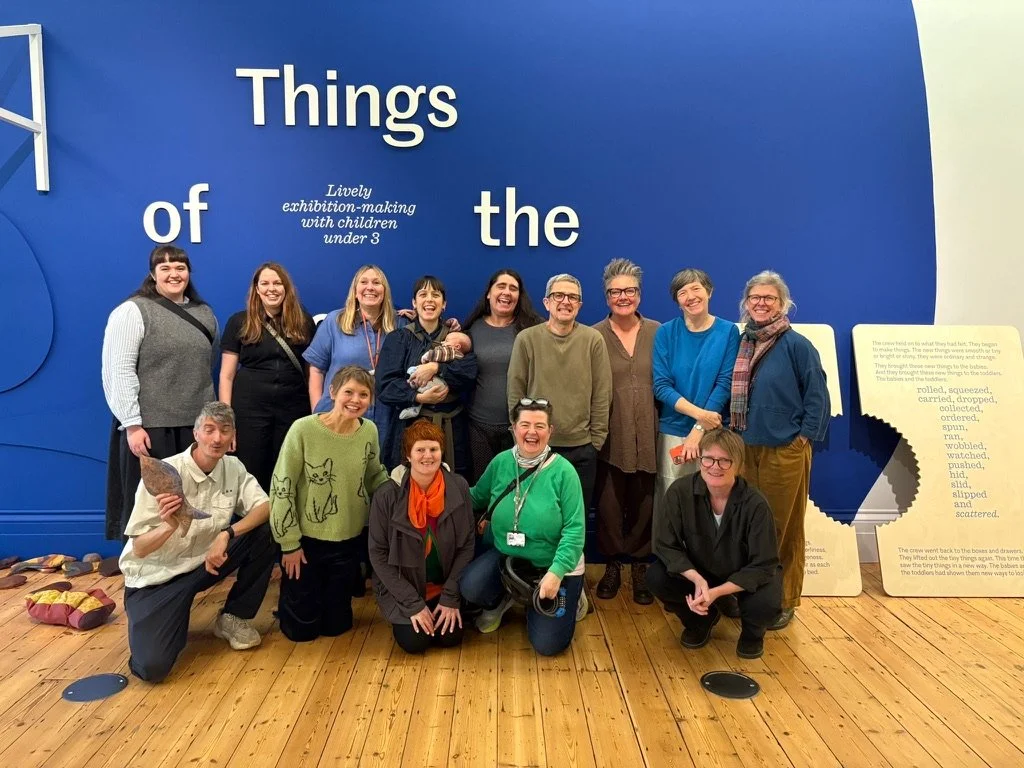
The project team is: Rachel Holmes, Manchester Metropolitan University (ManMet), Katy McCall, Senior Family Learning Manager, Manchester Art Gallery (MAG) Becky Shaw, Lead artist researcher Birmingham City University. Researchers include Christina MacRae, Early Years Researcher, ManMet and Ruthie Boycott-Garnett, Early Years Research Associate, ManMet. Project partners include Debbie Keary, Head of Centres (Martenscroft Nursery School & Sure Start Children’s Centres), Joanne Farrell, Early Years Locality Leader (Burnage, Old Moat, Chorlton, Fallowfield and Whalley Range Sure Start Children's Centres), Liz Mitchell, Platt Lead & Mary Greg Curator, MAG, artists Naomi Kendrick, Jackie Haynes, Josie Flynn, Charlotte Dawson, and Josie Hepplewhite. The project has also been supported by the work of Ami Jo Horricks, PhD student, Sophie Everest and Andy Hardman, Filmmakers, Belle Vue Productions, Ashleigh Armitage, Graphic Designer working within the arts, cultural and educational sectors, Sarah Rainbow, Collection Care Officer, MAG,Dan Simpkins, Exhibition Fabricator, Konstruct.